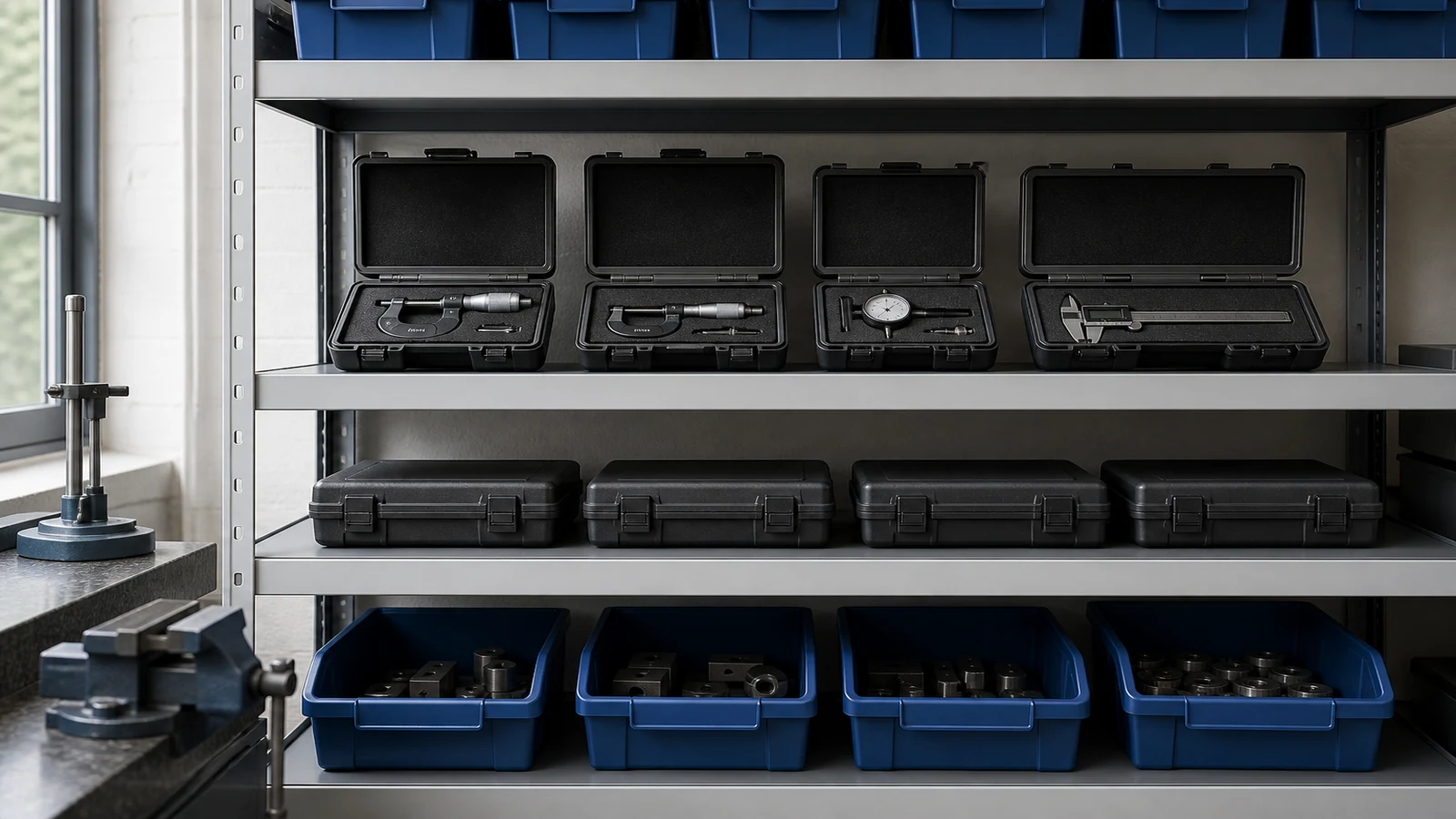
Short answer: Good weld inspection gauge storage is simple: keep the set together, protect measuring faces from impact and contamination, and record anything that could affect the next reading. Pagetool lists a Jinggong 16-piece weld inspection gauge set with a published 4 kg package weight and a 12-month warranty. The product page does not specify cleaning chemicals, storage temperature, case dimensions, materials, calibration interval or service life. Use gentle workshop housekeeping, follow any supplied instructions, and treat visible damage or an unexplained drop as a reason to pause and review the tool.
Key takeaways
- Keep the sixteen-piece set together in a labelled, protected storage location.
- The published 4 kg weight does not establish case dimensions or impact protection.
- Manufacturer does not specify cleaning products, calibration interval or service life.
Give the case a controlled home
A shared gauge set should have one known storage point rather than being divided between drawers. Keep the case away from grinding dust, loose fasteners, standing water and items that can strike a measuring face. The product page identifies a 16-piece format and a 4 kg package weight, but not the case's outer dimensions or protective construction.
Choose a shelf or locker that can support the packed set and leave enough room to close it without forcing the lid. Label the location and the responsible team. This makes a missing piece visible before the next inspection.
| Care point | Practical action | Product detail still unknown |
|---|---|---|
| Storage | Keep the complete set in one labelled location | Case dimensions and material |
| Surface dirt | Remove loose dust with a clean soft cloth | Approved cleaning agent |
| Transit | Close and secure the case before moving it | Impact protection rating |
| Inspection record | Log damage or a missing piece | Service-life limit |
Clean without inventing compatibility
After use, remove loose spatter and dust with a clean cloth suitable for the surface. Do not introduce a strong solvent, abrasive pad or lubricant just because it is common in the workshop. Manufacturer does not specify cleaning chemicals or surface compatibility on the listing.
Dry the pieces before returning them to the case, especially if condensation or wet handling has been possible. If a supplied instruction sheet gives a different method, follow that document and retain it with the kit.
- Check that every piece is present before cleaning the set.
- Brush or wipe away loose contamination without reshaping an edge.
- Inspect faces and edges for burrs, dents or distortion.
- Dry the pieces and return them to their labelled places.
- Record any damage, missing item or uncertain reading before the next job.
Use a handover record
A short sign-out note can record who took the kit, which job used it and whether every piece returned. If a reading could not be taken because of access or damage, attach that note to the job record rather than relying on memory.
The 12-month warranty is a shop term, not a maintenance schedule. The product page does not specify a calibration interval or service-life limit. Do not write an annual calibration date as if it came from the manufacturer.
When to pause the set
Quarantine or review a piece after a fall, a visibly rolled edge, a burr, corrosion, a face that no longer seats as expected or a reading that conflicts with a trusted reference. The next step depends on the site's procedure and the evidence available.
Manufacturer does not specify the material, accuracy, calibration status or service life. Storage and cleaning can reduce avoidable damage, but they cannot prove that a questionable gauge remains within a required tolerance.
Related guides and product details
Keep the set dry, together and traceable between jobs, and pause any piece whose condition could make the next reading difficult to defend. Read Weld Inspector Van Toolkit Checklist for the UK for related guidance. Read 16-Piece vs Smaller Weld Gauge Kits in the UK for related guidance. Review the documented specification on the Jinggong 16-piece weld inspection gauge set product page before ordering.
Sources and safety context
- Supports the 16-piece format, 4 kg weight, warranty and the absence of published care, calibration and service-life specifications. Current Pagetool weld inspection gauge set product page.