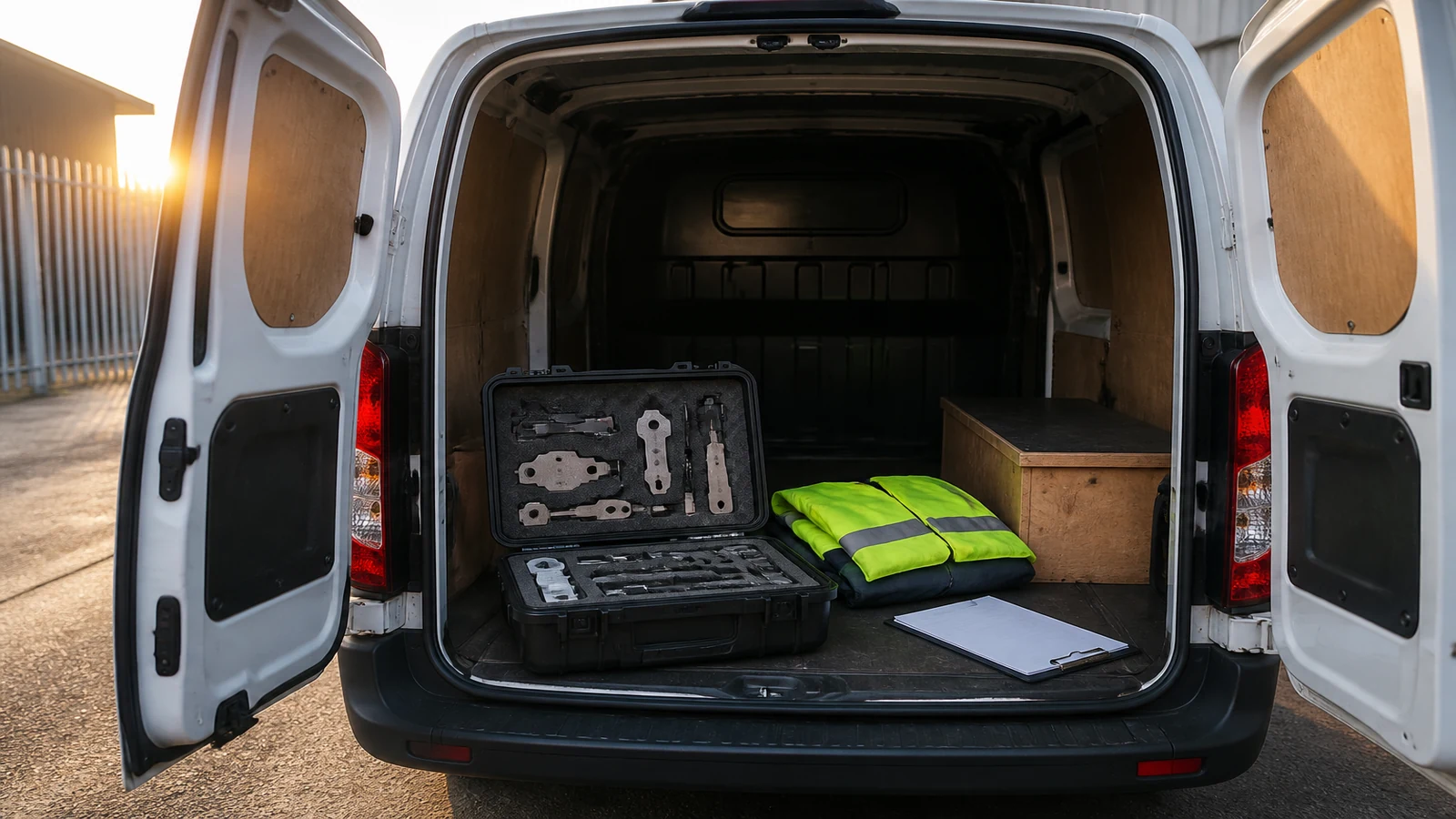
Short answer: A weld inspector's van toolkit should make the next check easier to perform and easier to record, not imply that one case replaces every inspection method. Pagetool lists a Jinggong 16-piece weld inspection gauge set for weld inspection and fillet weld measuring tools. The published pack weight is 4 kg, the price is £299.99 including VAT and the page states a 12-month warranty. Manufacturer does not specify the individual gauge roles, case dimensions, accuracy, calibration or compatibility. Pack the set as one dimensional aid inside a wider, job-specific kit.
Key takeaways
- Use the gauge case as one category in the van, alongside records and access equipment.
- Plan around the documented 4 kg weight, not an assumed case size or durability rating.
- Do not present the set as NDT equipment or as proof of inspection acceptance.
Pack for the work you will actually do
Start with the job pack: drawing copies, inspection forms, a way to make legible notes, suitable lighting and the personal or site equipment required by the host. Add measuring tools only after identifying the joint features to be checked. A broad product category is not a substitute for a task list.
The Pagetool set can be placed in the weld inspection and fillet weld measuring category. The product page does not name each piece, so the van checklist should call it a 16-piece set and keep any per-gauge role unverified until documented.
| Van category | Checklist item | Why it stays separate |
|---|---|---|
| Records | Drawings, forms and a dry note system | A gauge reading needs a job reference |
| Access | Suitable light and clear viewing access | The page does not promise visibility or reach |
| Measurement | Jinggong 16-piece gauge set | Per-piece roles are not listed |
| Protection | Secure storage and handover check | Case dimensions and impact rating are unspecified |
Make the case easy to find
The product page publishes a 4 kg package weight, which is enough to include the case in a load plan. It does not publish external dimensions, internal protection or a transport rating. Store the set where it cannot slide under heavier equipment, and confirm the latch or closure before leaving site.
Keep a simple count at departure and return. A missing piece discovered after the next job is harder to investigate than a missing piece found during the handover.
- Check the drawing and job scope before loading the gauge case.
- Secure the 4 kg pack where other tools cannot crush or strike it.
- Carry the record sheets and a clear method for identifying each joint.
- Confirm the complete set at the start and end of the visit.
- Write down any access problem or unverified gauge role before signing.
Keep the inspection boundary visible
A van kit can support a visual or dimensional visit, but the product page does not claim radiography, ultrasonics, magnetic particle testing, certification or calibrated accuracy. Do not let a full case look like a full inspection capability.
Where the job requires another method or documented competence, follow the contract and arrange the appropriate process. The gauge reading can remain part of the record without being labelled as the result of a different examination.
Confirm the missing vehicle details
Before making the set a permanent van item, ask for the case dimensions, individual contents, materials, range, accuracy, calibration status and any storage instructions. Manufacturer does not specify those fields on the public page.
The listing does state £299.99 including VAT and a 12-month warranty. Those commercial details help with purchasing, while the inspection role still depends on the job documents and the seller's technical answer.
Related guides and product details
Carry the Jinggong set as a protected, documented measurement category in the van, and keep the inspection method and technical evidence wider than the case itself. Read 16-Piece vs Smaller Weld Gauge Kits in the UK for related guidance. Read How to Choose a Welding Inspection Gauge Set for related guidance. Review the documented specification on the Jinggong 16-piece weld inspection gauge set product page before ordering.
Sources and safety context
- Supports the product category, 16-piece format, 4 kg weight, price, warranty and unspecified technical fields. Current Pagetool weld inspection gauge set product page.